
Cash Flow and Equity Build-up
Many years ago, Las Vegas hotels would entice customers with inexpensive rooms, meals and entertainment so they would gamble. It may have worked initially but if you’ve been to Las Vegas recently, the bargains are gone. Hotels expect each division to be a profit center on its own. As a consumer, I might not like the changes but as an investor, I’d have to be pleased with increased profitability.
 Years ago, real estate investors used to accept negative cash flow buoyed by tax incentives in hopes of making a big payday due to appreciation when they sold it. Today’s investors are focusing on tangible, current results like cash flow and equity build-up.
Cash flow is the amount of money you have left over after collecting the rent and paying the expenses. Since rents have gone up considerably due to supply and demand in the last few years and mortgage rates are at near record lows, income is up and expenses are down, making the cash flows attractive.
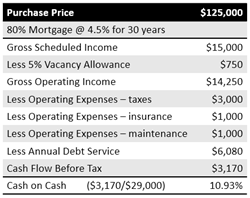
If the cash flow is sufficient, you could have a good investment even if the value of the property never increased. Cash on Cash doesn’t consider appreciation and measures the cash flow before tax advantages by the initial investment. A rental with $3,170 CFBT divided by an initial investment of $29,000 would generate a 10.93% Cash on Cash rate of return.
Low down payments on investor properties are also a thing of the past. Non-owner occupied mortgage money is available but the investor should expect to put down 25-30%. An advantage of having a smaller mortgage is a lower payment.
Most mortgages are amortized loans with both principal and interest due with each payment. The forced savings of the principal contribution builds equity in the property and can be considered a part of the rate of return.
A $100,000 mortgage at 4.5% for 30 years would have $1,613.29 applied to principal in the first year. Divide that by the same $29,000 initial investment and the amortization would generate another 6%.
Without factoring in appreciation or tax advantages, this rental example generates much more than most alternative investments. There certainly are many different aspects that affect the risk and return on rental investments. If you haven’t scrutinized single-family rental opportunities in a while, you should look again.
Information courtesy of Sandra Nickel, Sandra Nickel HatTeam Realtors in Montgomery, Alabama.
 How old is your bedroom furniture and what did you pay for it? Don’t know? That’s okay, let’s try an easier question. When did you buy the TV in your family room and is it a plasma, LCD or a LED?
 Interior updates:
 The first assumption that has to be made is that the comparable homes are similar in size, location, condition and amenities. Obviously, a variance in any of these things affects the price per square foot which will not give you a fair comparison.
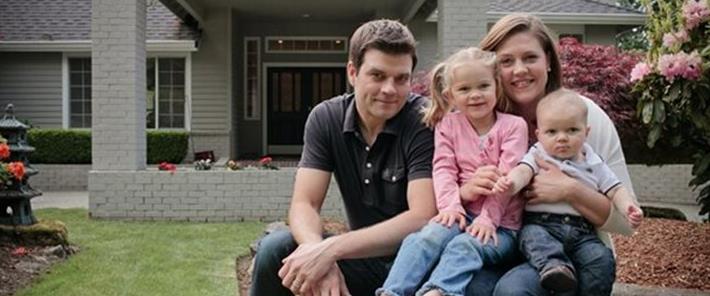 ense of community:
  More money has been lost to indecision than was ever lost to making the wrong decision. The economy and the housing market have caused some people to take a “wait and see” position that could cost them in lost opportunities as well as almost certain higher costs in the future.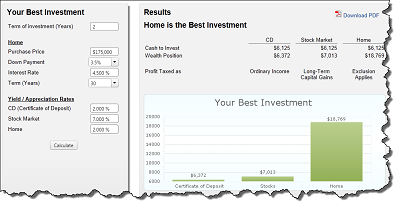
 after all the time and effort you have put into it in previous months. Not to despair, however; it may not be too late to revive—or at least repair---the grassy areas of your landscape. Try following the following steps:
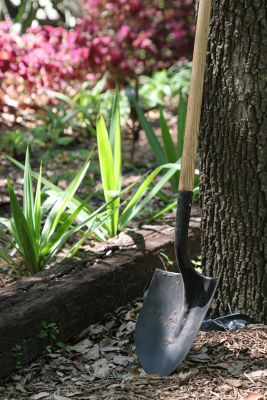 Just as we make an extra effort to watch over young children and the elderly during the summer months, so, too, we need to be aware of the needs of our plants. The following tips should be useful in ensuring enduring greenery through the fall:
 Private mortgage insurance is required on loans that exceed 80% of the home’s value. For conventional loans, the premiums range from 0.5% to 1% annually. The PMI could add close to $100.00 a month to the payments on a $200,000 mortgage and over $200.00 a month on a FHA mortgage.